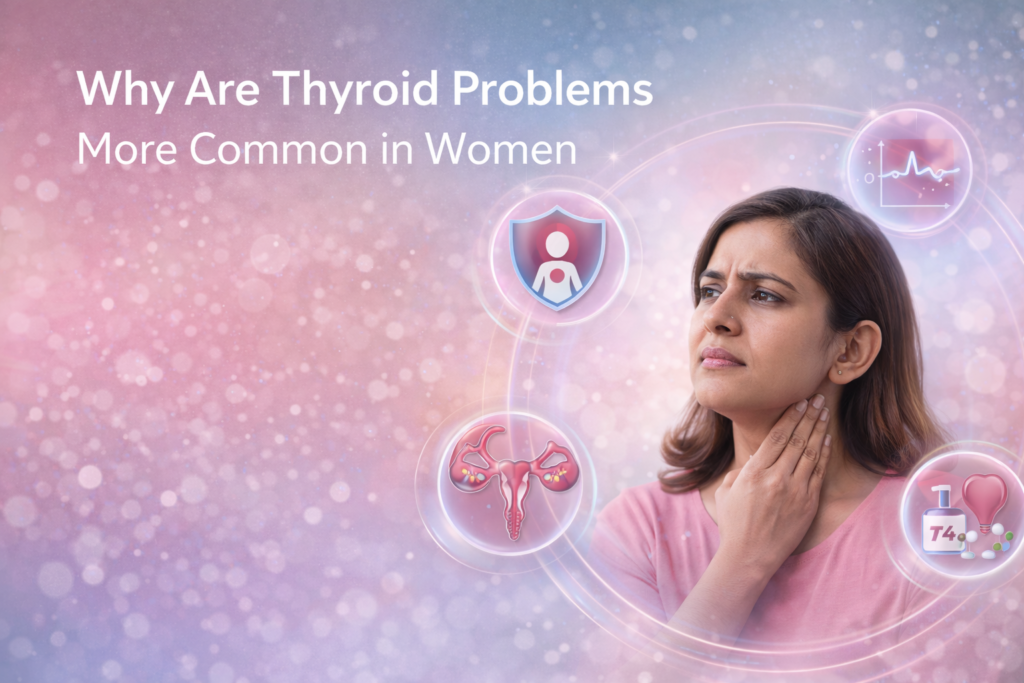
Among the many hormonal disorders seen in adults, thyroid problems are one of the most common health issues in women. In India, a large number of women are affected by hypothyroidism (low thyroid levels), often without realizing it in the early stages.
The thyroid gland plays a vital role in regulating metabolism, hormones, and energy levels. Even a small imbalance in thyroid hormones can affect menstrual cycles, weight, hair health, mood, and fertility, which is why thyroid disorders are more frequently identified in women.
Common Thyroid Problems Symptoms in Women
Women with thyroid problems may experience a wide range of symptoms, including:
- Irregular menstrual cycles
- Unexplained weight gain or weight loss
- Excessive hair fall
- Fatigue and low energy levels
- Dry skin and hair
- Mood changes, depression, or anxiety
- Difficulty in conceiving (fertility issues)
These symptoms often develop slowly and may be ignored or mistaken for routine stress or lifestyle changes, leading to delayed diagnosis.
Thyroid Disorders and Menstrual Irregularities
Thyroid hormones are closely linked with reproductive hormones. When thyroid function is abnormal, it can disturb the normal menstrual cycle, causing:
- Delayed or missed periods
- Heavy or prolonged menstrual bleeding
- Irregular cycles
Such disturbances are often an early sign of underlying thyroid dysfunction.
Impact of Thyroid Problems on Fertility
Thyroid imbalance is a common cause of fertility problems in women.
In cases of hypothyroidism:
- Ovulation may not occur regularly
- Hormonal imbalance can interfere with conception
- Risk of early pregnancy loss may increase
For this reason, thyroid testing is routinely advised for women facing difficulty in getting pregnant.
Importance of Thyroid Levels Before Pregnancy (Pre-Conception)
Women planning pregnancy should ensure their thyroid hormone levels are well controlled before conception.
Medical guidelines recommend that:
- TSH (Thyroid Stimulating Hormone) should be below 2.5 mIU/L during the pre-conception period.
Elevated TSH levels can lead to delayed conception and increase the risk of complications during pregnancy. Therefore, thyroid screening is essential for women planning to conceive.
Why Do Thyroid Problems Increase During Pregnancy?
Pregnancy naturally increases the body’s demand for thyroid hormones. As a result:
- Thyroid hormone levels may decrease during pregnancy
- Women with borderline or undiagnosed thyroid problems may develop symptoms
- Existing thyroid conditions may worsen if not monitored
Women who previously had symptoms such as irregular periods, weight changes, or hair loss are more likely to develop noticeable thyroid issues during pregnancy.
Hypothyroidism and Hyperthyroidism – Both Are Disorders
Thyroid problems are not limited to low hormone levels alone:
- Hypothyroidism – Reduced production of thyroid hormones
- Hyperthyroidism – Excess production of thyroid hormones
Both conditions can cause significant health problems if left untreated. However, in India, hypothyroidism is far more common among women.
Conclusion:
Thyroid problems are more common in women due to hormonal fluctuations, menstrual cycle changes, fertility-related factors, and increased hormonal demand during pregnancy.
Early detection through routine thyroid testing, proper medical guidance, and regular follow-up can effectively manage thyroid disorders. Women planning pregnancy should pay special attention to thyroid health to ensure a safe pregnancy and overall well-being.