
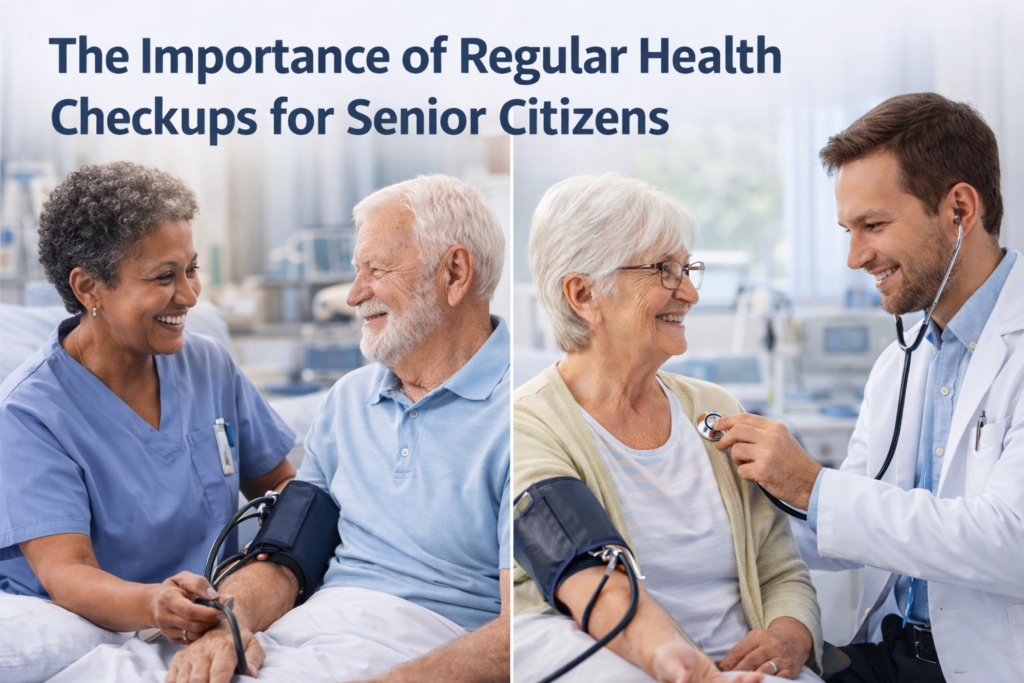
As we grow older, our body undergoes many natural changes. Metabolism slows down, immunity weakens, and the risk of chronic illnesses increases. During this stage of life, staying healthy is not just about treating diseases—it is about preventing problems before they become serious. This is where regular health checkups play a crucial role for senior citizens.
Why Regular Health Checkups Are Essential in Old Age
Many health conditions such as diabetes, high blood pressure, heart disease, kidney problems, and thyroid disorders develop slowly and may not show early symptoms. Regular health checkups help in identifying these issues at an early stage, making treatment more effective and less complicated.
Early detection can:
- Prevent disease progression
- Reduce hospital admissions
- Improve treatment outcomes
- Save medical expenses in the long run
For senior citizens, timely diagnosis often means better control and a healthier, more comfortable life.
Effective Management of Chronic Conditions
Most elderly individuals live with one or more chronic conditions. Regular checkups allow doctors to:
- Monitor disease progression
- Adjust medications when needed
- Prevent complications such as stroke, kidney failure, or heart attacks
Consistent monitoring ensures that existing health problems remain under control and do not affect daily activities or independence.
Preventive Care for a Better Future
Health checkups are not only for those who are already sick. Preventive screenings such as blood tests, blood pressure checks, vision and hearing assessments, bone density tests, and cancer screenings help in identifying potential risks early.
Preventive care:
- Improves longevity
- Reduces emergency health situations
- Helps seniors stay active and independent
Healthy Lifestyle Along with Regular Checkups
While regular checkups are important, combining them with a healthy lifestyle gives the best results. Senior citizens should focus on:
- Balanced nutrition with adequate proteins, vitamins, and minerals
- Regular physical activity like walking, yoga, or stretching
- Proper sleep and stress management
- Mental well-being through social interaction and hobbies
A healthy lifestyle supports medical treatment and strengthens overall well-being.
Tracking Health Records for Better Control
Maintaining health records is often overlooked but is extremely important for senior citizens. Keeping track of:
- Test reports
- Medication schedules
- Doctor appointments
- Previous medical history
Using notebooks or digital health apps helps seniors and caregivers stay organized. This practice avoids medication errors, improves communication with doctors, and empowers seniors to take control of their own health.
Cost-Effective and Peaceful Living
Regular health checkups may seem like an extra expense, but in reality, they reduce long-term healthcare costs by preventing serious complications and emergency treatments. More importantly, they provide peace of mind—both for seniors and their families.
Knowing that health is being monitored regularly brings confidence, comfort, and emotional security during the golden years.
Conclusion:
Regular health checkups are not a choice but a necessity for senior citizens. They help in early detection, effective disease management, and prevention of future complications. When combined with a healthy lifestyle and proper health record tracking, they significantly improve quality of life.
Taking a proactive approach towards health ensures that senior citizens can enjoy a longer, healthier, and more fulfilling life, making their golden years truly meaningful.