Introduction: Diet of thyroid
Hypothyroidism is a common condition where the thyroid gland becomes underactive and produces fewer thyroid hormones. In such cases, the diet of thyroid patients plays a very important role in managing the condition naturally. Thyroid hormones help control metabolism, energy levels, body temperature, and overall body functions. When hormone production slows down, metabolism also becomes slow and several symptoms begin to appear.
Following the right diet of thyroid helps reduce symptoms like weight gain, fatigue, and low energy. A balanced diet supports proper hormone function and improves overall health. At the same time, some foods can negatively affect thyroid activity and should be limited or avoided.
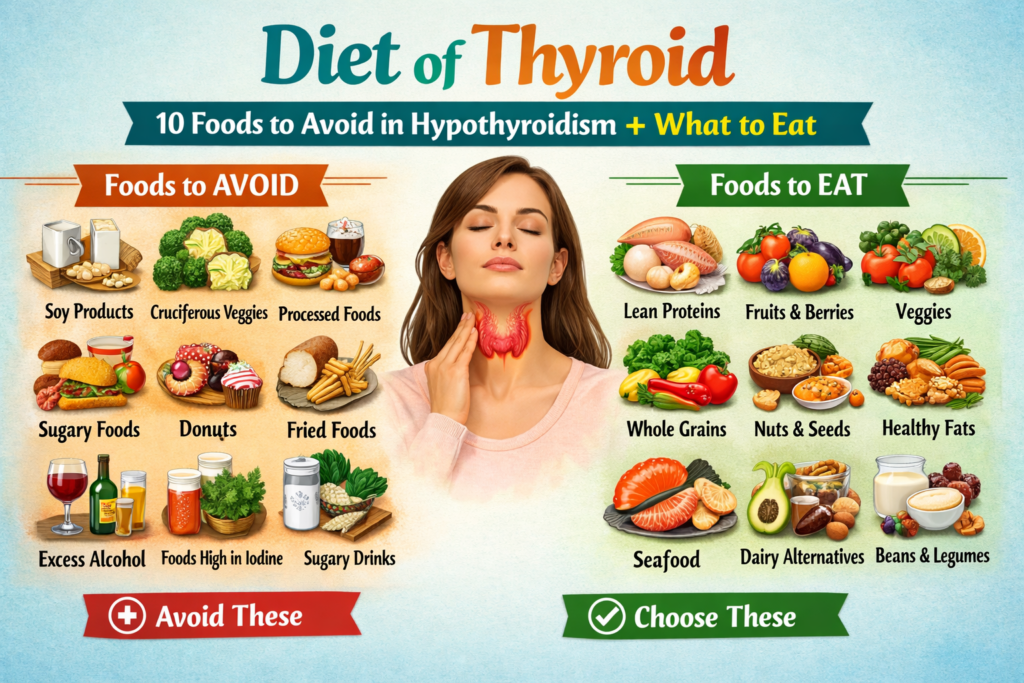
In this blog, we will explain 10 foods to avoid in the diet of thyroid patients and also highlight the best foods to include daily. This simple guide will help you manage hypothyroidism effectively through correct food choices.
What Is Hypothyroidism?
The thyroid gland is a small butterfly-shaped gland located in the neck. It produces thyroid hormones called T3 and T4, which control how the body uses energy. In hypothyroidism, the gland becomes weak and cannot produce enough hormones. As a result, the body’s metabolic rate slows down.
Common symptoms include:
- Extreme tiredness and weakness
- Weight gain without any reason
- Cold sensitivity
- Dry skin and hair fall
- Constipation
- Slow heartbeat
- Depression or low mood
- Swelling in the face or hands
When you have hypothyroidism, it is important to follow a balanced lifestyle and a proper diet. This is why the diet of thyroid is so important for managing the condition.
Foods to Avoid for a Healthy Diet of Thyroid Patients
1. Cabbage
Cabbage is a healthy vegetable, but in hypothyroidism, it can cause problems. It contains goitrogens, which interfere with iodine absorption. Iodine is necessary for producing thyroid hormones. If iodine absorption decreases, the thyroid becomes weaker and hormone production decreases.
Therefore, avoid eating cabbage daily or in large amounts. If you still want to eat it, eat it in small quantity and cooked (not raw).
2. Cauliflower
Cauliflower is also high in goitrogens. When consumed in large amounts, it may reduce thyroid hormone production. Many people think vegetables are always safe, but in hypothyroidism, certain vegetables can worsen the condition.
So avoid cauliflower in daily meals. If you want to include it, cook it well and eat occasionally.
3. Bajra (Pearl Millet)
Bajra is a common Indian grain and is considered healthy for many people. But for hypothyroid patients, bajra contains goitrogens which can reduce thyroid function. It can cause thyroid gland enlargement and reduce hormone production.
Therefore, avoid bajra and replace it with wheat, oats, or brown rice.
4. Soy Products
Soy is rich in protein, but in hypothyroidism, it may reduce thyroid hormone absorption. Soy products such as:
- Soy milk
- Soy chunks
- Tofu
- Soybeans
can interfere with thyroid medicine and reduce thyroid function.
Avoid soy products, especially if you are on thyroid medication.
5. Tasty Salt (Non-Iodized Salt)
Many people use regular salt or tasty salt which does not contain iodine. Iodine is required for the thyroid gland to produce hormones. Without iodine, the thyroid becomes weak and hormone production decreases.
So avoid using tasty salt. Use iodized salt only. This helps maintain thyroid hormone levels.
6. High-Sugar Foods
Sugar and sweets increase weight and worsen hypothyroidism symptoms. In hypothyroidism, metabolism is already slow. When sugar is added, weight gain increases quickly. High sugar also affects blood sugar and insulin levels.
Avoid:
- Sweets
- Cakes
- Chocolates
- Soft drinks
- Bakery items
7. Fried and Junk Foods
Fried foods contain unhealthy fats which increase body weight and worsen metabolism. They also cause inflammation and increase cholesterol levels.
Avoid:
- Chips
- Fried snacks
- Fast food
- Burgers
- Pizza
These foods may taste good, but they worsen hypothyroidism.
8. Processed Foods
Processed foods contain high salt, preservatives, and unhealthy fats. They reduce immunity and cause thyroid imbalance. They also increase water retention and weight gain.
Avoid:
- Ready-to-eat meals
- Packaged noodles
- Instant soups
- Canned foods
9. High-Salt Pickles
Pickles contain high salt and preservatives. In hypothyroidism, high salt increases water retention and swelling. This worsens the symptoms of hypothyroidism.
Avoid pickles and salted foods. Instead, eat fresh vegetables and homemade salads.
10. Alcohol
Alcohol affects thyroid hormone levels and damages the liver. It also interferes with the absorption of thyroid medication. Alcohol also increases weight and causes fatigue.
Therefore, avoid alcohol completely if you have hypothyroidism.
Foods to Include (Best Diet for Hypothyroidism)
Hypothyroidism can be managed better with the right diet. Let’s see the best foods to include in the diet of thyroid.
1. Milk
Milk is a rich source of calcium and protein. Calcium is important for bones, and protein improves metabolism. Many people avoid milk, thinking it causes weight gain, but milk is beneficial when taken in the right quantity.
Drink 350 ml of milk daily. If you are lactose intolerant, choose low-fat or lactose-free milk. Milk helps maintain bone strength and improves overall energy.
2. High-Fiber Foods
Fiber helps digestion and prevents constipation, which is common in hypothyroidism. Fiber also helps in weight management and keeps blood sugar levels stable.
Include high-fiber foods like:
- Oats
- Whole wheat
- Brown rice
- Fruits like apples, pears
- Vegetables like spinach, carrots
A high-fiber diet helps maintain healthy metabolism.
3. Egg Whites
Egg whites are rich in protein and low in fat. Protein is important for muscle strength and metabolism. In hypothyroidism, muscles weaken and metabolism slows down, so protein is essential.
Eat 3–4 egg whites daily or as advised by your doctor. Egg whites are a good source of lean protein.
4. High-Fiber Lunch
Lunch should be rich in fiber and protein. A balanced lunch helps maintain energy levels and prevents weight gain.
A good lunch can include:
- Salad
- Vegetables
- Lentils
- Whole grains
High fiber foods help in proper digestion and reduce constipation.
5. Protein-Rich Foods
Protein improves metabolism and prevents muscle loss. Hypothyroid patients must include protein in every meal.
Include:
- Chicken
- Fish
- Eggs
- Paneer
- Lentils
Protein helps maintain energy and supports thyroid function.
Important Tips for Hypothyroid Patients
1. Exercise Is Important
Exercise boosts metabolism and improves thyroid function. Doing daily exercise is very important for hypothyroid patients.
At least 30 minutes daily is recommended.
Recommended exercises:
- Walking
- Yoga
- Jogging
- Cycling
- Light weight training
Exercise improves metabolism and reduces weight gain.
2. Balanced Diet Is Necessary
Diet is not only about avoiding foods. It is about eating the right foods at the right time. A balanced diet helps maintain energy levels and improves thyroid function.
So plan your meals properly.
3. Take Thyroid Medicine Correctly
If you are on thyroid medicine, do not skip it. Take the medicine on an empty stomach and wait 30–45 minutes before eating food.
Avoid taking medicine with:
- Milk
- Coffee
- Tea
- Iron supplements
These can reduce medicine absorption.
Conclusion:
Hypothyroidism is manageable with the right diet and lifestyle. Avoid foods like cabbage, cauliflower, bajra, soy, and tasty salt because they reduce thyroid function.
Instead, include milk, high-fiber foods, egg whites, and protein-rich meals.
A good diet of thyroid combined with regular exercise and proper medication can improve symptoms, increase energy, and maintain body weight.