Blood infection occurs when an infection present in any part of the body spreads into the bloodstream. This serious medical condition is commonly referred to as sepsis.
Normally, the immune system fights infections effectively. However, in some situations, the infection escapes local control and enters the blood circulation. Once this happens, the body reacts aggressively, leading to widespread inflammation. This reaction can reduce blood pressure, disturb oxygen supply, and damage vital organs such as the kidneys, lungs, brain, and heart.
Blood infection is not a simple fever-related illness. It is alife-threatening medical emergency that requires immediate attention.
How Dangerous Is a Blood Infection?
When blood infection becomes severe, it can lead to:
- Sudden drop in blood pressure
- Reduced oxygen delivery to organs
- Kidney, heart, lung, or brain failure
- Need for ICU admission and life support
- Risk of death if treatment is delayed
Doctors consider sepsis a time-critical condition, where early treatment can save lives.
Who Is at Higher Risk of Blood Infection?
As mentioned in your original content, these infection is more common in certain groups of patients rather than everyone.
High-Risk Individuals Include:
- Patients undergoing cancer treatment
- Those receiving chemotherapy or radiation therapy
- People with weak or uncontrolled immune systems
- Individuals with diabetes, kidney disease, or liver disease
- Elderly people and young children
- Patients hospitalized for long periods
- People using catheters, ventilators, or undergoing dialysis
In these individuals, even a minor infection can rapidly progress into a blood infections.
Blood Infection Early Signs
Recognizing blood infection early signs can prevent serious complications.
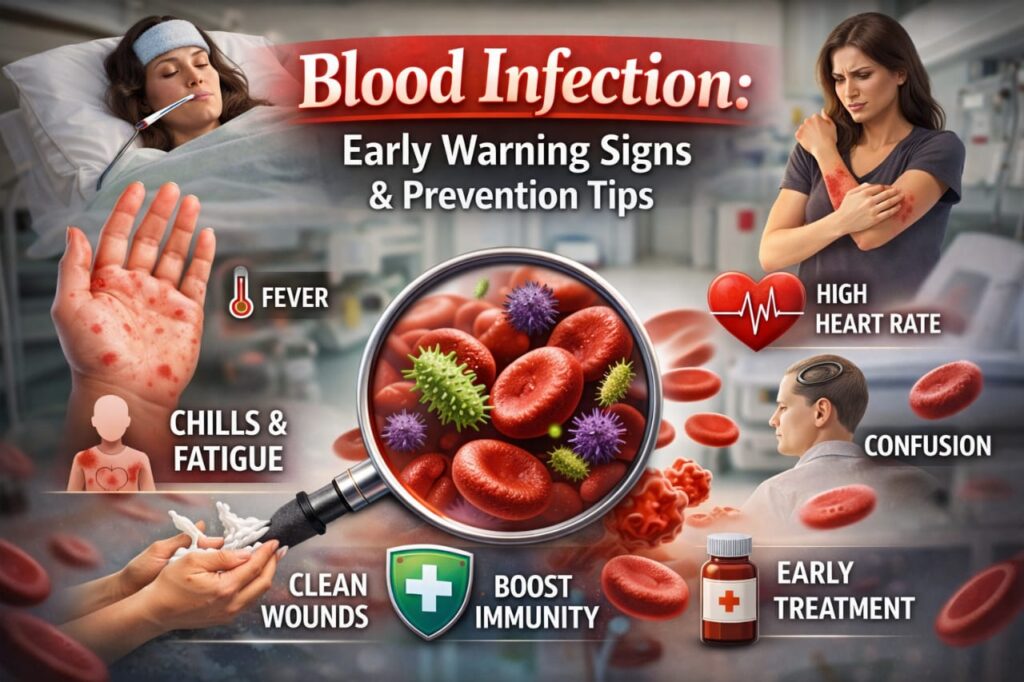
High-Grade Fever
- Persistent fever of 104°F to 105°F
- Fever that does not reduce with medications
- Fever associated with chills and shivering
Such fever should never be ignored or delayed, especially in high-risk patients.
Other Early Warning Symptoms
- Dizziness or light-headedness
- Low blood pressure
- Reduced urine output
- Extreme weakness or fatigue
- Dullness or confusion
- Loss of consciousness in severe cases
- Rapid heartbeat
- Fast or difficulty in breathing
- Cold, clammy, or sweaty skin
These symptoms indicate that the body is struggling to cope with infection.
How to Identify Blood Infection at Home
If a high-risk patient is present at home, caregivers should watch closely for:
- Continuous high fever without relief
- Reduced alertness or abnormal behavior
- Sudden weakness or inability to stand
- Noticeable decrease in urine output
- Poor appetite and fluid intake
Waiting at home hoping for improvement can be dangerous. Immediate medical evaluation is essential.
What to Do If Blood Infection Is Suspected
Just as people rush to the hospital during a heart attack, the same urgency is required when blood infection is suspected.
- Reach a hospital within one hour
- Do not rely on home remedies or over-the-counter medicines
- Do not delay assuming the fever will settle
- Early hospital care significantly improves survival
Delay in treatment can allow the infection to worsen rapidly.
Why Early Diagnosis Is Crucial
Early diagnosis of Blood Infection Early Signs and Prevention plays a major role in patient survival.
- In early stages, treatment with antibiotics and intravenous fluids can control the infection
- In late stages, patients may require ICU care, ventilator support, or dialysis
- Severe delays can lead to irreversible organ failure and death
Early medical intervention can make the difference between recovery and life-threatening complications.
Blood Infection Prevention
Preventing blood infection is possible with proper care and awareness.
Prevention Measures Include:
- Never ignoring minor infections
- Treating fever, wound infections, and urinary infections early
- Completing the full course of prescribed antibiotics
- Maintaining good hand hygiene
- Ensuring clean wound and catheter care
- Regular medical follow-ups for high-risk patients
- Maintaining hospital hygiene standards
These steps significantly reduce the risk of infection spreading into the bloodstream.
Conclusion:
Blood infection is not a routine illness. It is a medical emergency where every hour matters.
Recognizing Blood Infection Early Signs and Prevention, seeking immediate medical care, and avoiding delays can save lives. Families with high-risk individuals must stay alert and act quickly when warning signs appear.
A single timely decision can prevent severe complications—and in many cases, save a life.