
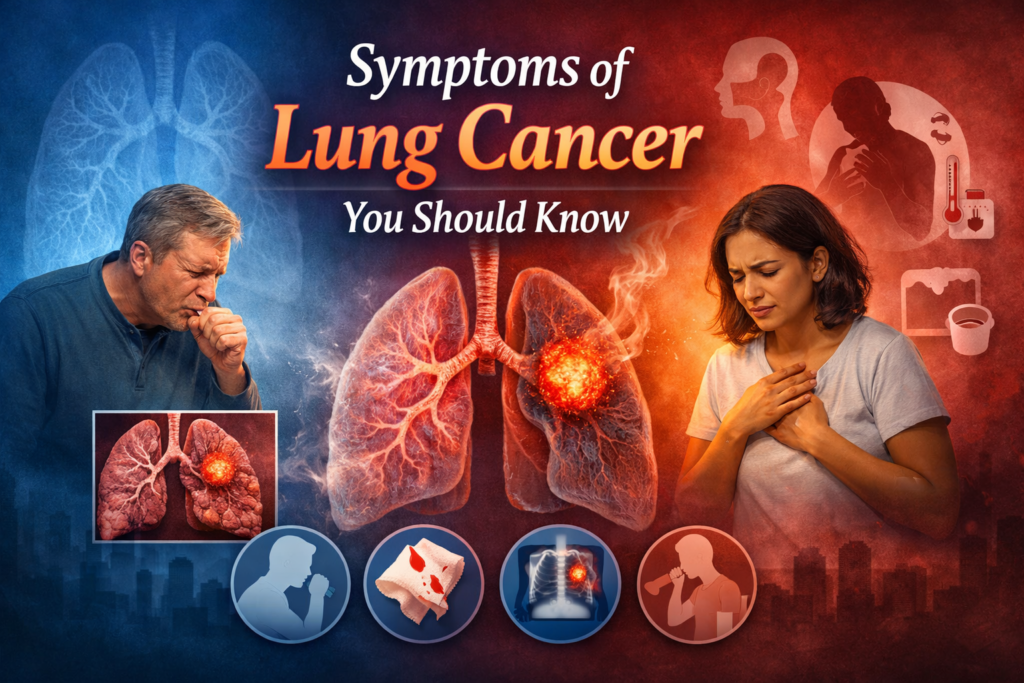
Symptoms of Lung Cancer often develop when abnormal and uncontrolled cell growth begins in the lungs. Normally, body cells grow, divide, and die in a regulated way. When this process is disrupted, cancer develops, leading to lung cancer.
Lung cancer is one of the most common cancers worldwide and is a leading cause of cancer-related deaths. In India as well, the number of lung cancer cases is increasing every year. It is more commonly seen in men and in people who smoke. However, over the last 10–15 years, lung cancer has also been increasingly diagnosed in non-smokers, which is a growing health concern.
How Does Lung Cancer Develop?
Lung cancer does not develop overnight. It usually progresses slowly over many years. Initially, small changes occur in the lung cells, which often go unnoticed. Over time, these abnormal cells multiply and form a tumor. If left undetected and untreated, the tumor can grow larger and spread to other parts of the body.
One of the major challenges with lung cancer is that symptoms of lung cancer may not appear in the early stages. As a result, many patients are diagnosed only when the disease has advanced. However, as the condition progresses, the body starts showing warning signs.
Types of Lung Cancer
Lung tumors can broadly be classified into two categories:
1. Benign Tumors
-
- Usually non-cancerous
-
- Grow slowly
-
- Do not spread to other parts of the body
-
- Often stop growing after a certain point
2. Malignant Lung Cancer
-
- Cancerous and dangerous
-
- Grows rapidly
-
- Can spread to other organs through blood or lymphatic system
-
- Can be life-threatening if not treated on time
Most lung cancer cases fall under the malignant category.
Symptoms of Lung Cancer
Recognizing the symptoms of lung cancer at an early stage can significantly improve treatment outcomes. The common symptoms include:
1. Persistent Cough
A cough that does not go away is one of the earliest signs of lung cancer.
-
- Lasts for several weeks
-
- Does not improve with medications
-
- Often worse at night
2. Coughing Up Blood
Coughing up blood or blood-streaked sputum is a serious warning sign.
-
- May start as small streaks of blood
-
- Can increase over time
-
- Occurs due to damage to blood vessels in the lungs
Immediate medical attention is essential if this symptom is present.
3. Shortness of Breath
As lung function becomes affected:
-
- Breathing may become difficult even during mild activity
-
- Climbing stairs or walking short distances may cause breathlessness
-
- Chest tightness may be felt
4. Chest Pain
-
- Pain while breathing deeply
-
- Pain during coughing or laughing
-
- Pain may spread to shoulders or back
This pain is often mistaken for muscle strain or acidity, leading to delayed diagnosis.
5. Unexplained Weight Loss
Patients with lung cancer often experience:
-
- Loss of appetite
-
- Sudden and unintentional weight loss
-
- Weakness and reduced energy levels
These changes occur due to metabolic alterations caused by cancer.
6. Extreme Fatigue
-
- Constant tiredness
-
- Lack of energy even after adequate rest
-
- Difficulty performing daily activities
7. Recurrent Lung Infections
Lung cancer weakens the body’s defense system, leading to:
-
- Repeated episodes of pneumonia
-
- Frequent bronchitis
-
- Persistent chest infections
8. Change in Voice
-
- Hoarseness
-
- Deep or strained voice
-
- Difficulty speaking for long periods
9. Symptoms Due to Spread to Other Organs
If lung cancer spreads beyond the lungs, additional symptoms may appear:
-
- Brain involvement: headaches, dizziness, seizures
-
- Bone involvement: persistent bone pain
-
- Liver involvement: abdominal swelling, yellowing of eyes
Smoking and Lung Cancer
Smoking is the leading cause of lung cancer. Cigarette smoke contains numerous toxic chemicals that damage lung cells over time. Long-term smoking:
-
- Damages the DNA of lung cells
-
- Triggers abnormal cell growth
Why Is Lung Cancer Increasing in Non-Smokers?
In recent years, lung cancer among non-smokers has increased due to:
-
- Air pollution
-
- Long-term exposure to chemical dust and industrial fumes
-
- Radiation therapy for other cancers
-
- Genetic factors
-
- Early exposure to smoking at a young age
Environmental and occupational hazards play a major role in these cases.
When Should You See a Doctor?
Consult a doctor immediately if the following symptoms persist for more than 2–3 weeks:
-
- Persistent cough
-
- Coughing up blood
-
- Breathing difficulty
-
- Unexplained weight loss
Early diagnosis improves treatment success and survival rates.
Conclusion:
Lung cancer is a serious condition that often progresses silently in the early stages. Understanding and recognizing the symptoms of lung cancer can lead to early diagnosis and better treatment outcomes. Avoiding smoking, reducing exposure to pollutants, and maintaining a healthy lifestyle are key preventive measures. Most importantly, do not ignore persistent symptoms—timely medical consultation can save lives.