
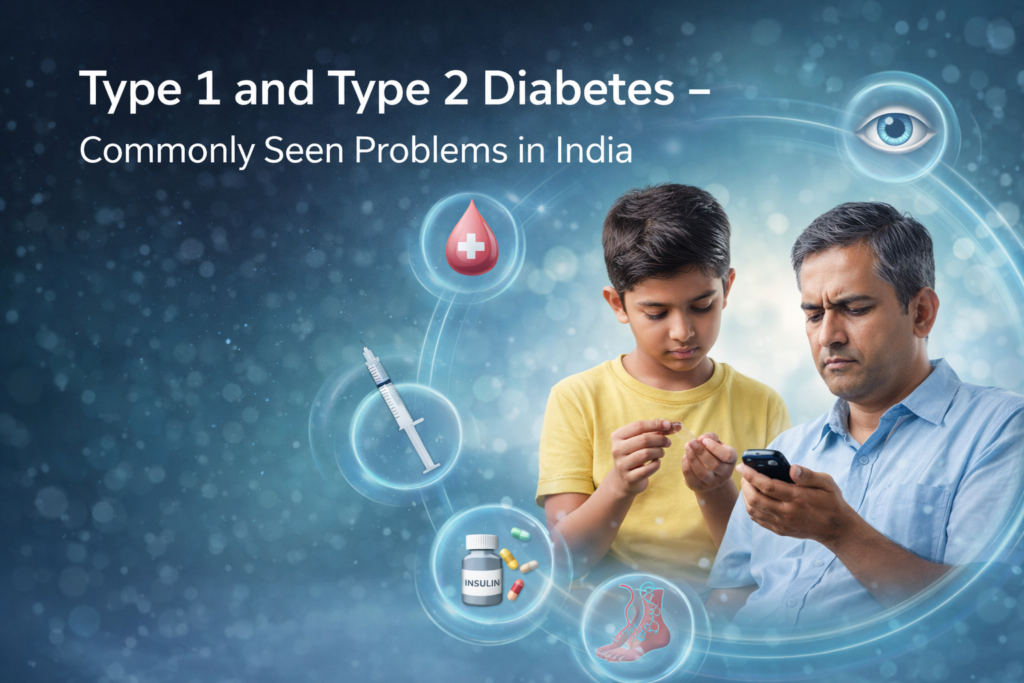
Introduction – Why Is Diabetes a Major Concern in India?
Types of diabetes are becoming a serious public health challenge in India. Diabetes is a chronic metabolic disorder in which blood sugar (glucose) levels rise above the normal range.
Insulin is a hormone produced by the pancreas that helps move glucose from the blood into the body’s cells to be used as energy. When insulin is not produced in adequate amounts or when the body cannot use insulin effectively, diabetes develops.
In India, diabetes is often referred to as a “silent epidemic” because many people live with the condition for years without recognizing the symptoms. Due to this lack of awareness, diagnosis often happens at an advanced stage, increasing the risk of complications.
Main Types of Diabetes
There are different types of diabetes, but they are broadly classified into two main categories:
- Autoimmune-related diabetes
- Lifestyle and genetically influenced diabetes
These types of diabetes differ in their causes, age of onset, symptoms, and treatment approaches. Understanding these differences is essential for effective management and long-term health.
Autoimmune Diabetes (Type 1 Diabetes)
Type 1 diabetes is an autoimmune condition. In this form of diabetes, the body’s immune system mistakenly attacks and destroys the insulin-producing beta cells of the pancreas.
Key Characteristics of Type 1 Diabetes
- It is autoimmune in nature
- Genetic predisposition may be present
- It can be inherited from parents through genes
- Commonly begins in childhood or young adulthood
- The pancreas produces little or no insulin
Because of this, people with Type 1 diabetes require lifelong insulin therapy. This condition cannot be controlled with tablets alone, making insulin injections essential for survival.
Lifestyle and Genetic Diabetes (Type 2 Diabetes)
Among the different types of diabetes, Type 2 diabetes is the most commonly seen in India. It often runs in families and is caused by a combination of genetic and lifestyle factors, not obesity alone.
Why Type 2 Diabetes Runs in Families
- People with excess body weight have a higher risk
- A family history of diabetes increases susceptibility
- Genes remain stable within families and pass across generations
- Sedentary lifestyle and stress increase risk, even in children
Today, reduced physical activity, unhealthy eating habits, and high stress levels are leading to early-onset Type 2 diabetes among young people in India.
Type 1 and Type 2 Diabetes – Key Differences
Understanding the differences between the main types of diabetes helps prevent confusion and ensures correct treatment.
- In autoimmune diabetes, insulin production is almost absent
- In lifestyle-related diabetes, insulin is present but not used effectively by the body
- Sudden weight loss is more common in Type 1 diabetes
- Weight gain is more commonly associated with Type 2 diabetes
- The age of onset differs significantly between the two
Due to these differences, treatment strategies for these types of diabetes also vary.
Common Diabetes Symptoms Seen in India
Many symptoms are common across the different types of diabetes and should not be ignored:
- Excessive thirst
- Frequent urination
- Constant tiredness and weakness
- Slow healing of wounds and injuries
- Blurred vision
- Weight gain (more common in Type 2 diabetes)
- Weight loss (more common in Type 1 diabetes)
These symptoms are often mistaken for routine fatigue, leading to delayed diagnosis.
Why Is Weight Loss More Common in Type 1 Diabetes?
In Type 1 diabetes, the absence of insulin prevents glucose from entering the body’s cells. To meet energy requirements, the body starts breaking down fat and muscle tissue.
This process results in:
- Sudden and unexplained weight loss
- Weakness
- Severe fatigue
This weight loss is an important early warning sign and should prompt immediate medical evaluation.
Diabetes in Children and Young Adults – A Growing Indian Reality
Earlier, diabetes was considered a condition affecting only older adults. This perception has changed due to lifestyle shifts in India.
Major Contributing Factors
- Increased consumption of junk food
- Excessive screen time
- Lack of physical activity
- High stress levels
- Family history of diabetes
A sedentary lifestyle has significantly increased the risk of diabetes even among children and young adults.
Importance of Blood Sugar Testing
👉 If any of the above symptoms are present, getting a blood sugar test done at least once is highly recommended.
Common Blood Sugar Tests
- Fasting blood sugar
- Post-meal blood sugar
- HbA1c test
Early diagnosis helps to:
- Reduce long-term complications
- Simplify treatment
- Maintain a normal, active lifestyle
Long-Term Problems If Diabetes Is Not Controlled
If blood sugar levels remain uncontrolled, serious complications can develop, regardless of the type of diabetes:
- Heart disease
- Kidney damage
- Eye problems
- Nerve damage
- Foot ulcers
In India, these complications are commonly seen due to late diagnosis and poor follow-up care.
Prevention and Lifestyle Changes for Indian Families
Autoimmune diabetes cannot be prevented, but lifestyle-related diabetes can be prevented or delayed with timely action.
Important Preventive Measures
- Following a balanced Indian diet
- Regular walking or physical exercise
- Maintaining a healthy body weight
- Managing stress effectively
- Early screening for individuals with a family history of diabetes
Prevention is not only about medicines—it is about daily lifestyle habits.
Conclusion – Awareness Is the Key
Genetics, obesity, stress, and sedentary habits together increase the risk of diabetes in India. Instead of ignoring early symptoms, timely blood sugar testing is crucial.
With early diagnosis, correct treatment, and healthy lifestyle modifications, people affected by different types of diabetes can lead a healthy and active life.